Concrete Driveways
How to Choose the Right Concrete Driveway Finish for Your Tweed Heads Home
Which concrete driveway finish suits your Tweed Heads home? Broom, exposed aggregate, coloured or stamped — how each looks, wears and prices up.
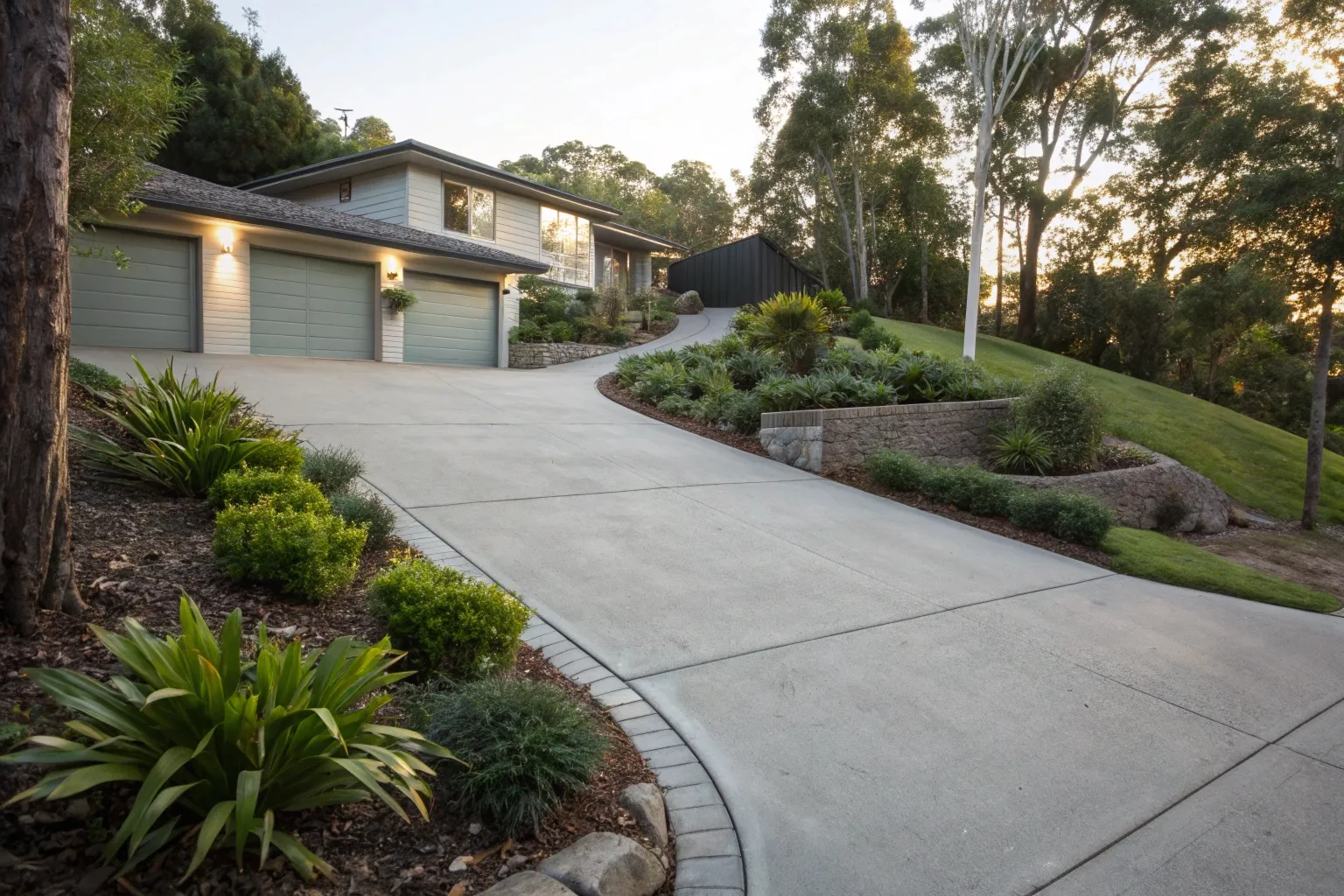
A driveway is one of the first things anyone sees when they arrive at your home. In Tweed Heads, where sea-change buyers pay close attention to presentation, the finish you choose does more than protect the concrete underneath — it frames the property and hints at how well the rest of the house has been looked after. This guide walks through the four main driveway finish options and how to pick the one that fits your block, your home, and your budget.
Broom finish — the practical everyday choice
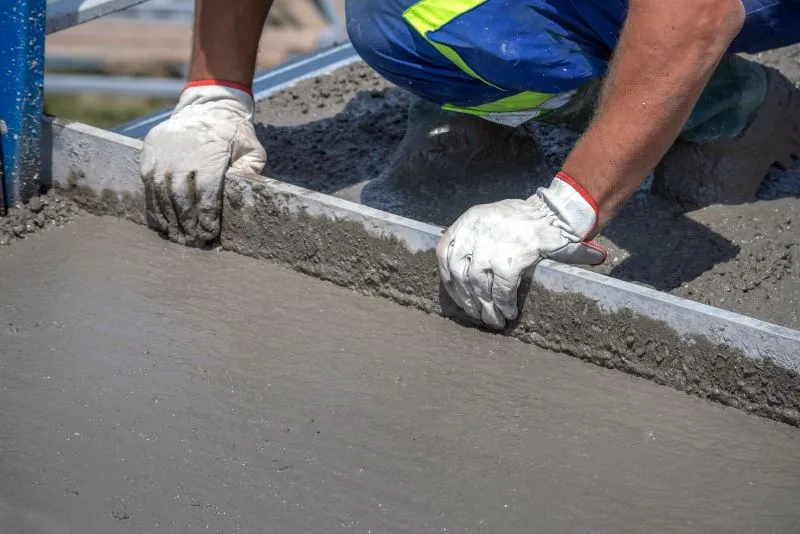
A broom finish is the most common driveway surface across Australia, and for good reason. After the concrete driveway is poured and levelled, a wide-bristled broom is dragged across the still-wet surface to create a fine, textured pattern. That texture gives the driveway its non-slip properties, which matters on any sloped block or in wet weather.
It’s the most affordable finish, wears predictably, and holds up well in the Tweed’s UV and coastal conditions. If you want a low-fuss surface that just does its job, a broom finish is hard to beat.
Exposed aggregate — coastal character with real texture
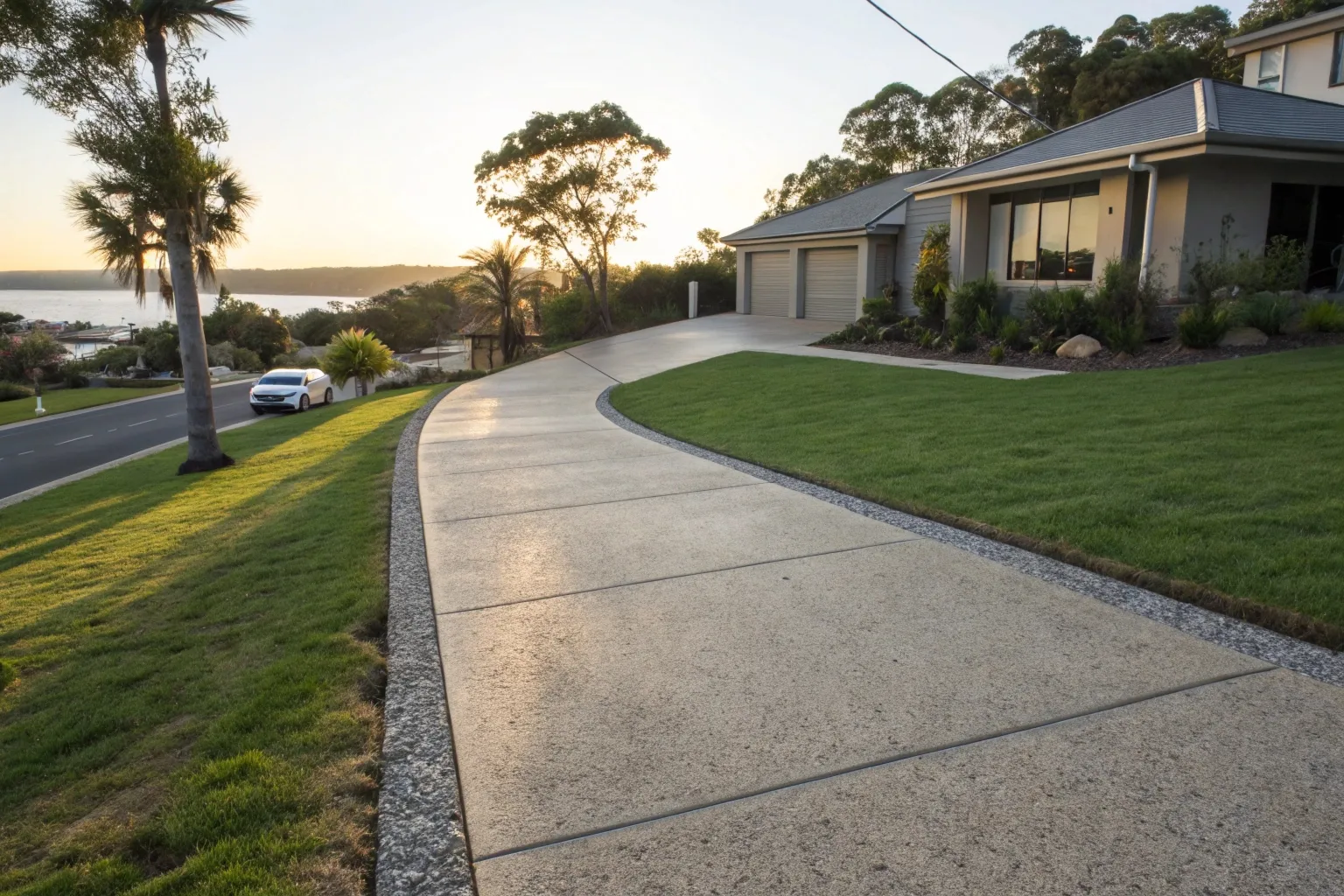
Exposed aggregate reveals the natural stone within the concrete mix by washing back the top layer during finishing. The result is a textural, tactile surface that reads as premium and blends beautifully with the coastal aesthetic of newer Kingscliff and Casuarina builds.
Because the aggregate is exposed, it’s inherently non-slip and holds up to heavy vehicle loads without showing wear the way plain concrete does. It costs more than a broom finish, but the visual impact and durability make it a popular upgrade on properties where the driveway is a prominent feature from the street.
Coloured concrete — subtle tone matching
Coloured concrete uses pigments added to the concrete mix, giving the entire slab a uniform tone rather than a surface coating. That means the colour doesn’t fade unevenly with wear — it goes all the way through.
Warm greys, sandstones, and off-whites tend to work best with the rendered brick and Colorbond homes common across Banora Point and Tweed Heads South. Coloured concrete pairs well with other finishes too — a common combination is coloured concrete with an exposed aggregate border, or a coloured broom finish for a slightly softer look than plain grey.
Stamped concrete — patterned finish without the maintenance
Stamped concrete is patterned to mimic pavers, stone, or brick, but it’s a single continuous slab underneath — no joints for weeds to push through and no pavers to shift over time.
It works particularly well on wider driveways where the surface area is large enough for the pattern to read properly from the street. If you like the look of a paved driveway but don’t want to deal with the ongoing maintenance, stamped is a strong option.
How to decide
The right finish depends on three things: your home’s style, your budget, and how much attention you want to draw to the driveway itself. A broom finish keeps the focus on the house; exposed aggregate and stamped finishes make the driveway a design feature in its own right; coloured concrete sits somewhere in between.
At quote stage, a good concreter will walk you through what works for your specific property — the façade, the landscaping, and the wider streetscape — so the decision feels straightforward. If you’d like to talk through the options for your home, get in touch and we’ll come out for a free on-site quote.
Frequently asked questions
Can I mix finishes on one driveway?
Yes — combining a plain broom or coloured concrete field with an exposed aggregate border is a common design choice that keeps costs down while adding visual interest.
Which finish is best in wet weather?
Broom finish and exposed aggregate are both naturally non-slip and perform well in wet conditions. Stamped concrete depends on the sealer used — ask your concreter about non-slip additives.
How long does each finish last?
All four finishes will last 25 to 30 years or more when installed correctly. The finish itself matters far less to longevity than the subbase preparation, reinforcement, and mix specification underneath.