Serving Tweed Heads & the Tweed Coast
Call 07 5681 8532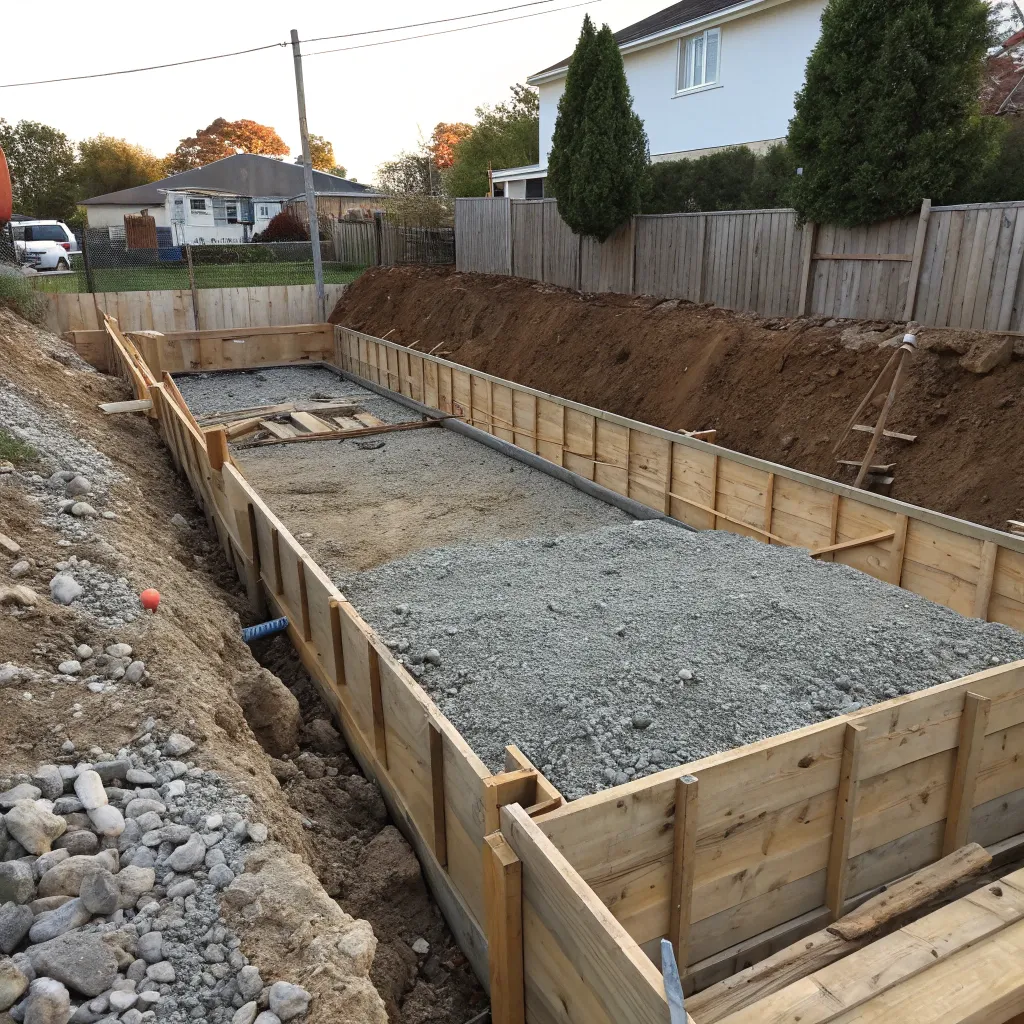
The shed kit gets all the attention. The slab gets the budget leftovers.
It’s one of the most common mistakes property owners make — and one that costs far more to fix than it ever would’ve cost to get right the first time. A correctly specified shed slab isn’t just a flat piece of concrete. It’s the structural foundation that keeps your shed frame square, your floor serviceable under load, and your interior free from moisture and pest entry problems that follow a poorly graded pour. Get it right, and you won’t think about it again for decades.
In Tweed Heads and across the broader Tweed Shire, subtropical rainfall, high humidity, and shifting soil profiles — sandy coastal ground near Kingscliff through to clay-heavy terrain toward Murwillumbah — make correct specification more consequential here. We build shed slabs that account for these conditions from the ground up.
How Much Does a Shed Slab Cost in Tweed Heads?
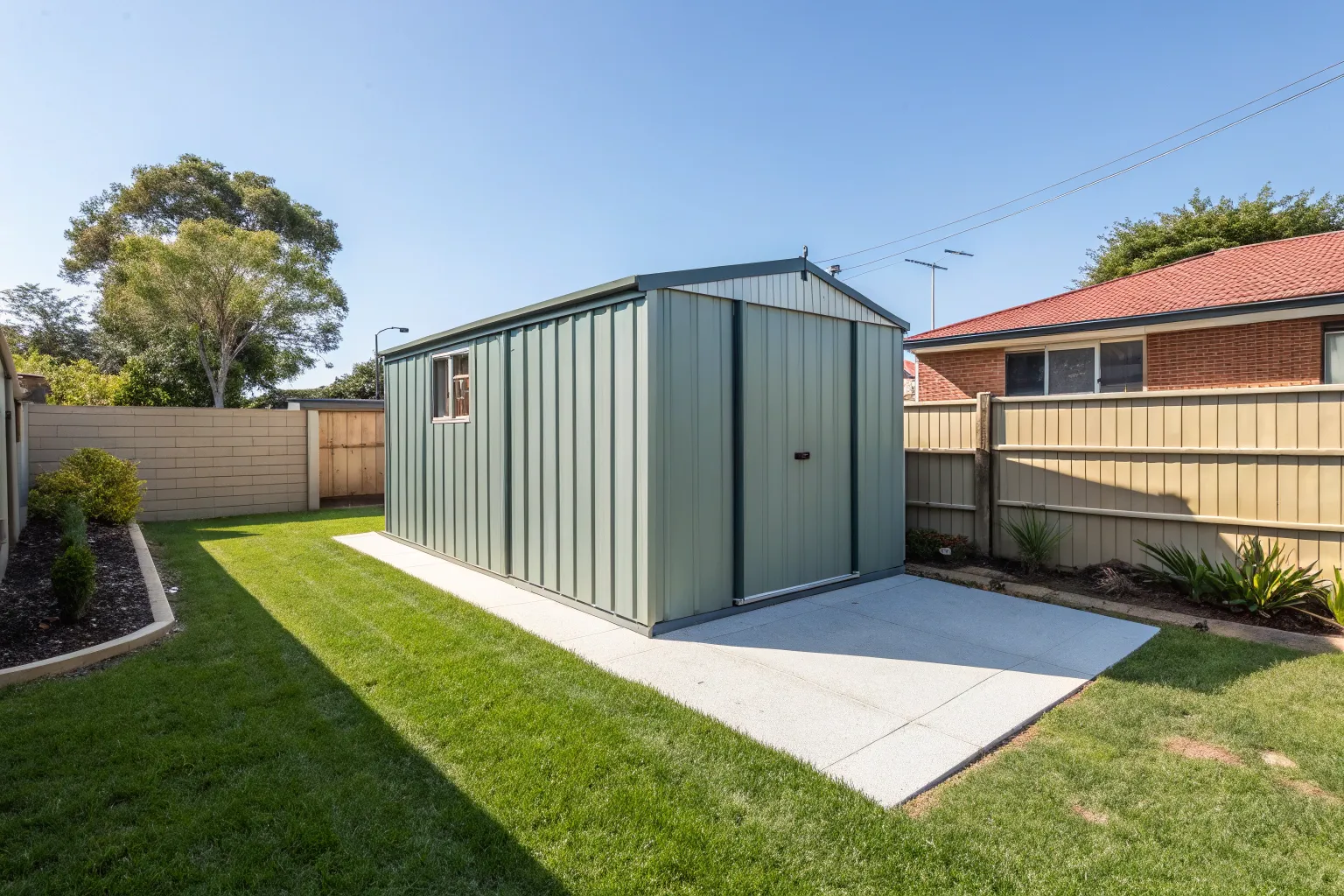
Shed slab costs in Tweed Heads typically range from $80–$150 per m² installed, depending on slab thickness, reinforcement, site conditions, and access. Most residential shed slabs fall between $1,500–$6,000 total, depending on size and specification.
Key factors that affect your final price:
- Size & thickness — Standard shed slabs are 100mm thick; heavier-use workshop slabs may require 125mm+
- Reinforcement — Mesh is standard; engineer-specified rebar adds cost on reactive or poor-bearing soils
- Site preparation — Sloping blocks, clay-heavy ground, or poor access increase excavation and formwork costs
- Finish type — Broom or steel trowel finishes suit most shed applications; decorative finishes cost more
- Minimum job charges — Small slabs often attract a minimum call-out, pushing the per-m² rate higher on compact footprints
Tweed Heads pricing aligns with northern NSW and Gold Coast rates. Always request a site-specific quote — online calculators rarely account for local soil and access conditions.
Why Your Shed Slab Is the Most Important Part of the Build
Most people building a shed spend weeks researching the kit — the steel gauge, the roof profile, the door configuration. The slab decision gets made in about five minutes based on whoever quotes the cheapest. That’s the wrong way around.
The slab is what everything else sits on. If it’s underspecified, the shed frame won’t stay square over time — and a racking frame puts stress on every connection point in the kit above it. If the subbase is poorly compacted, the slab settles unevenly under load. If the grading is wrong, water sits against the base channel and works its way in. If the vapour barrier is skipped or incorrectly lapped, moisture transmits up through the concrete, and you’re dealing with damp floors, rust on stored equipment, and mould in an enclosed shed within a few seasons.
None of these problems announces itself on our day. They show up six months later, or two years later, when fixing them means cutting out concrete and starting sections again. The shed kit can be replaced panel by panel. The slab is a long-term commitment — and it deserves to be treated like one from the start.
What Goes Into a Properly Built Shed Slab
A shed slab that performs over the long term isn’t complicated — but every stage has to be done correctly. Cutting corners at any point in the process creates problems that compound over time.
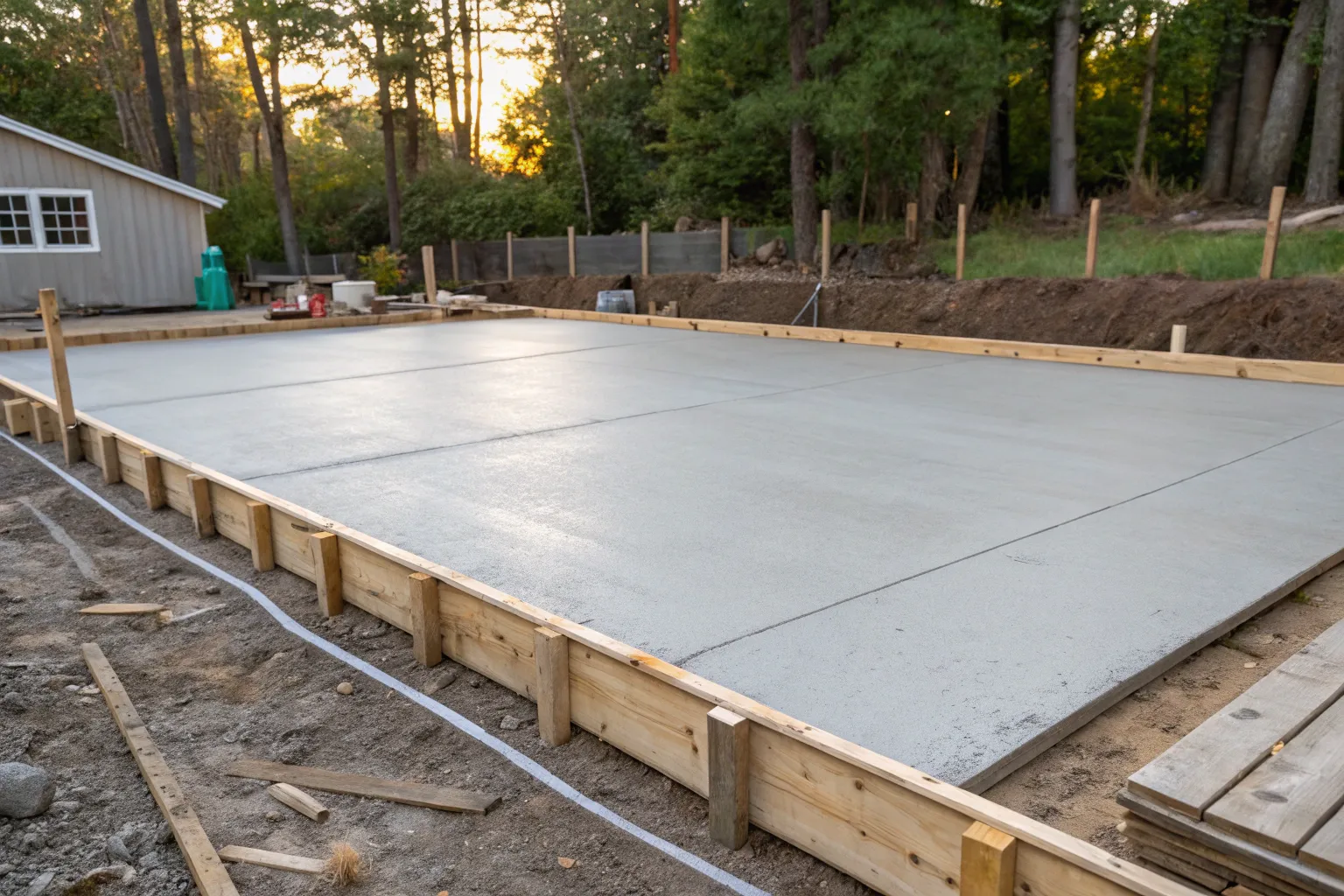
Site Clearing & Subgrade Compaction
Site clearing, excavation to correct depth, and subgrade compaction form the base on which everything else relies. Across the Tweed Shire, soil varies significantly — sandy coastal profiles near Kingscliff and Casuarina behave differently from clay-heavy ground toward Murwillumbah, and preparation accounts for both.
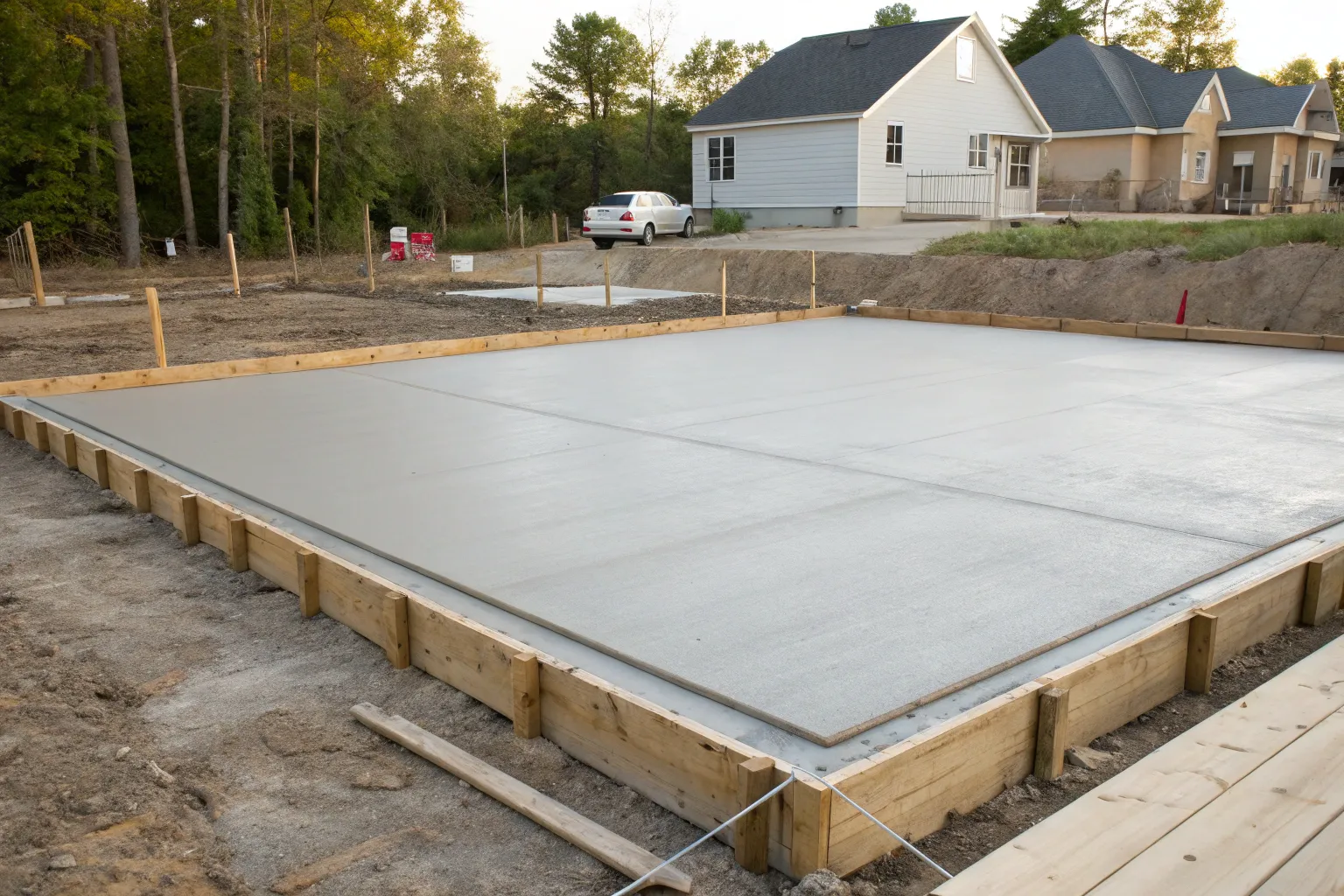
Vapour Barrier & Moisture Management
In Tweed Heads’ high-humidity environment, a correctly installed vapour barrier blocks moisture transmission through the slab. Skip it or lap it incorrectly, and you’re looking at damp floors, rusting equipment, and mould inside enclosed sheds within a few seasons.
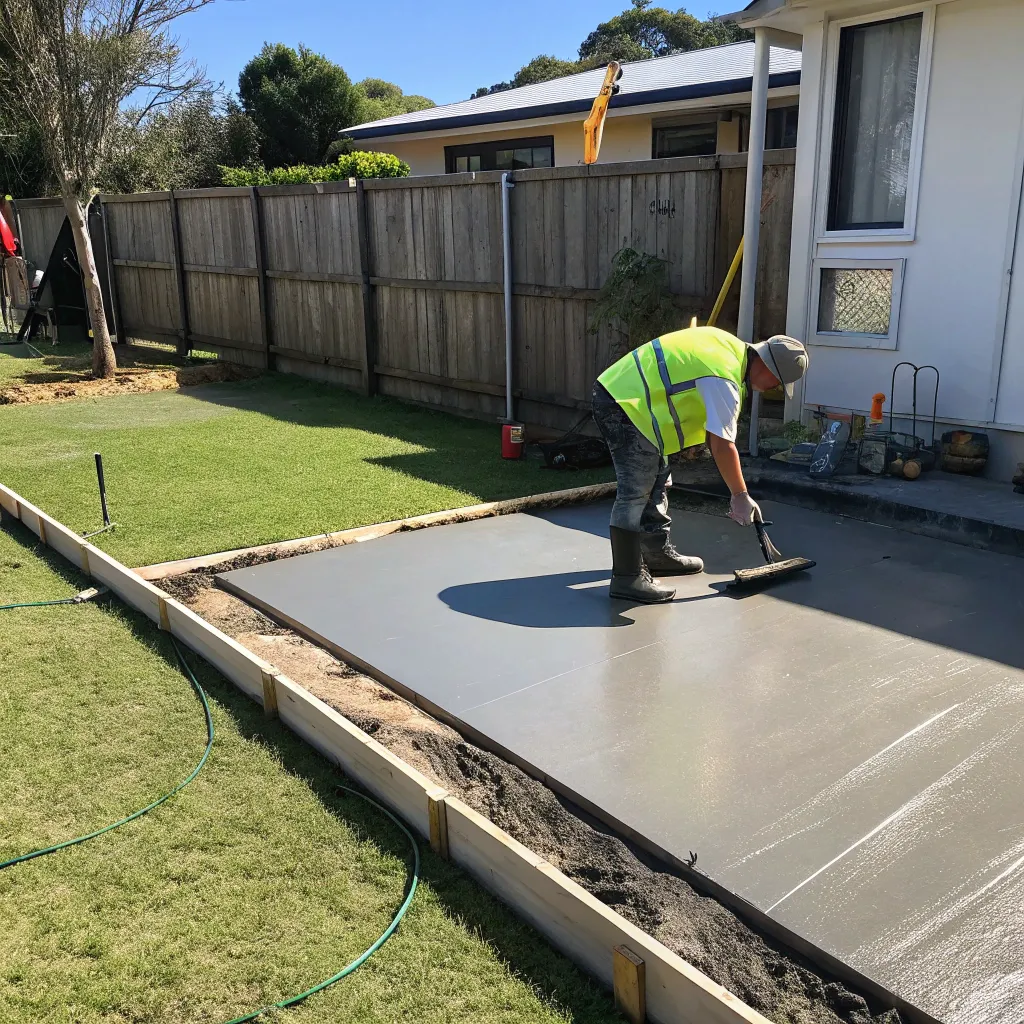
Formwork, Reinforcement & Concrete Specification
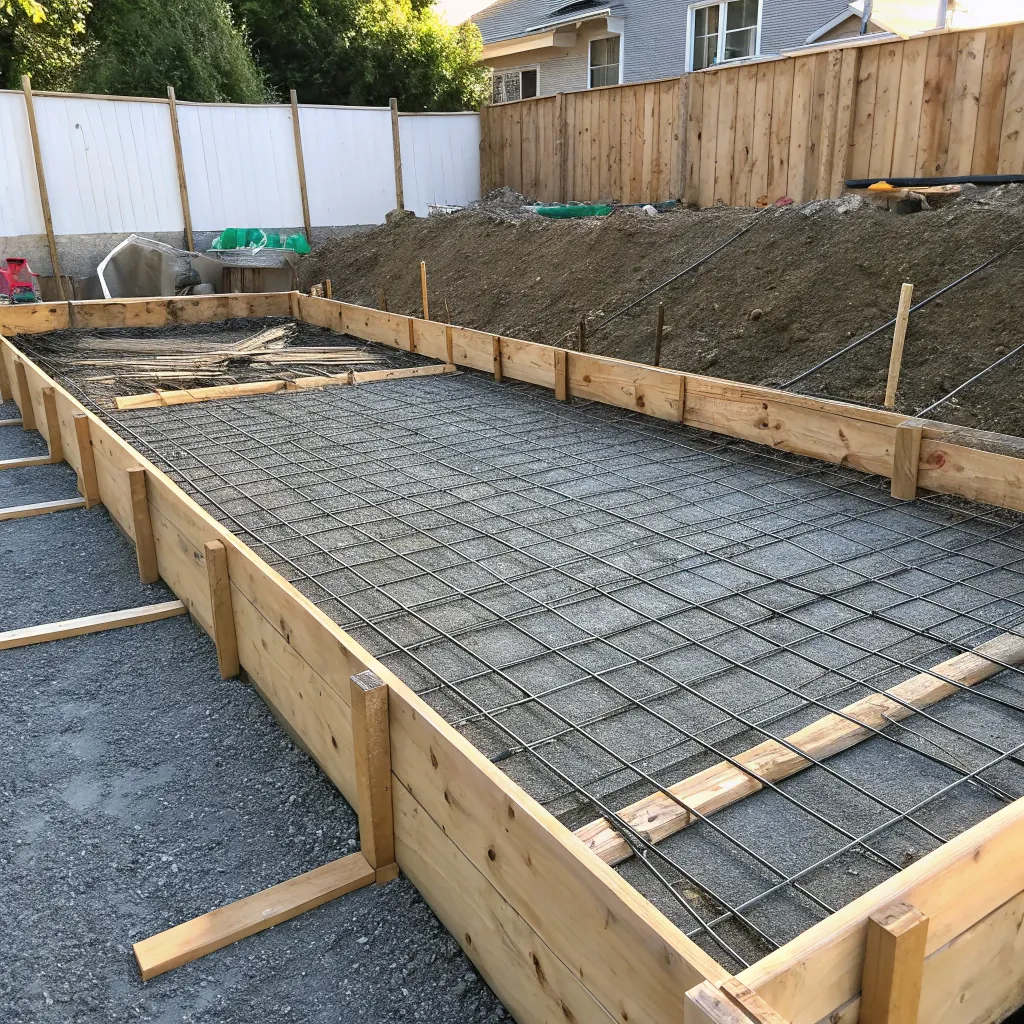
Formwork sets the slab dimensions and edge profiles. Reinforcement — mesh or engineer-specified rebar — is selected based on intended use and soil classification. Concrete mix is specified for outdoor exposure, load requirements, and subtropical climate conditions. No one-size approach.
Shed Slab Finishing — What Matters and Why
Finishing a shed slab isn’t about aesthetics. It’s about function — and getting a few practical details right at the pour stage that would be expensive to correct later.
The slab needs to be level and flat to tolerances that allow the shed kit to install without shimming. Even small variations across the footprint create frame alignment problems that carry through the entire build. For vehicle washing bays or wet work sheds, a fall toward the door or a central drain needs to be formed into the slab — not added as an afterthought. The slab edge has to be formed correctly to integrate with the shed wall base channel, which varies between kit manufacturers and needs to be confirmed before the pour.
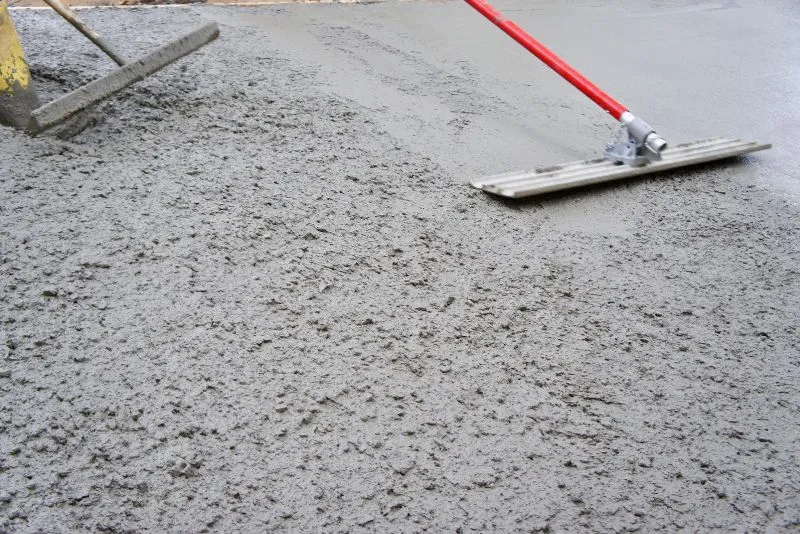
For the finish surface, steel trowel and broom finishes both suit shed applications well. A steel trowel gives a smoother, easier-to-clean surface suited to workshops. Broom finish adds texture underfoot. Both are a significant step up from a rough or uneven surface, which creates cleaning problems, accelerates floor wear, and makes any kind of workshop use more difficult than it needs to be.
Matching Your Slab to Your Shed's Intended Use
The specification should reflect what the shed is actually going to do.
Garden & Storage Sheds: A standard 100mm slab is typically sufficient for lighter loads and smaller footprints. Correct subbase prep and a level finish still matter — poor grading leads to door alignment issues and moisture ingress that become a regular nuisance.
Vehicle Workshops & Garages: Higher point loads call for 125mm or greater thickness, heavier mesh or rebar, and a steel trowel finish. Floor drainage is worth forming in at the pour stage. Double and triple bay configurations are common across Banora Point and Terranora.
Rural, Farming & Machinery Sheds: Largest footprints, heaviest loads — tractors, implements, bulk storage. Slab spec accounts for dynamic loads from machinery movement across Murwillumbah and the broader Tweed Shire rural catchment. Post-and-beam configurations have specific edge and footing requirements confirmed at the planning stage.
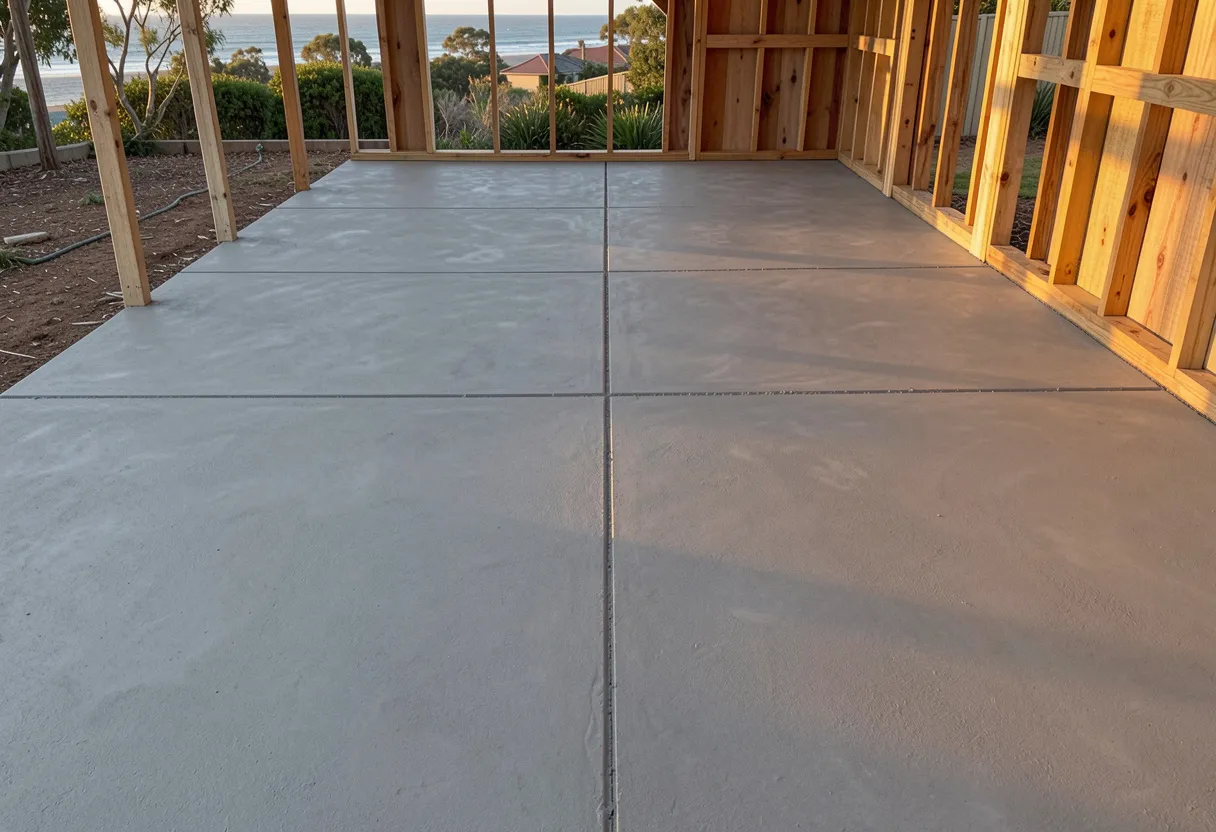
How Tweed Heads Conditions Affect Shed Slab Specification
Local conditions aren’t an afterthought here — they’re built into how we specify every slab from the start.
Subtropical rainfall puts real pressure on subbase drainage. A subbase that performs adequately in a drier climate can fail here when heavy summer rainfall events saturate the ground repeatedly over the years. Vapour barrier specification is matched to the humidity exposure of the site, not a generic standard.
Soil variability across the Tweed Shire is significant. Sandy profiles near Kingscliff, Casuarina, and Chinderah need careful compaction to achieve bearing capacity. Clay-reactive ground toward Murwillumbah moves with moisture content — subbase preparation accounts for that movement by default.
Salt air corrosion is a real factor for coastal-adjacent properties across Tweed Heads South and Kingscliff. Concrete mix selection and reinforcement cover depths reflect that risk.
None of this is an upsell conversation. It’s the baseline of what a correctly built shed slab looks like in this region.
Site Prep & Council Compliance in Tweed Shire
Demolition doesn’t end when the concrete leaves the site.
Once the material is cleared, the subbase condition, compaction, and site drainage all need to be right before any new work can begin. We leave sites in a state that’s ready for the next stage — not one that creates more work for the concreter before they’ve even started.
On the council side, some demolition and concrete removal projects in Tweed Shire require permits or documentation before work can proceed. What’s required depends on the scope of the job, the property type, and what’s being demolished. We’re across the local requirements and can advise on what applies to your project from the outset. Getting that sorted early keeps the job moving — a permit issue that surfaces mid-project causes delays that could’ve been avoided with the right groundwork done before the first cut was made.
Shed Slab Sizes & Configurations We Work Across
We work across the full range — from compact residential garden sheds through to large rural machinery sheds across the broader Tweed Shire catchment.
That covers residential garden and storage sheds, double and triple bay vehicle workshops, rural machinery sheds on Murwillumbah and Tweed Shire properties, and small commercial storage and operations sheds. Property types vary significantly across Tweed Heads, Banora Point, Tweed Heads South, Chinderah, Kingscliff, and the rural surrounds — and slab configurations are matched to each.
One common problem we see is slab and shed footprint misalignment — where the slab has been poured before the shed kit dimensions were properly confirmed. It’s an avoidable mistake. We work from the shed manufacturer’s specifications so the slab dimensions, edge profiles, and anchor bolt placement align correctly with the kit as delivered. If you’re not sure what size slab you need, that’s a conversation worth having before the quote — not after the pour.
Why Local Expertise Matters When Choosing a Shed Slab Contractor
The contractor you choose determines the quality of what goes in the ground. Here’s what we bring to every shed slab job across the Tweed Shire.
Licensed & Insured: We’re licensed concreters, fully insured, and all work is completed to Australian Standards. Straightforward — but worth confirming with any contractor before work starts.
Local Soil & Site Knowledge: Direct experience across the full range of soil profiles and site conditions in the Tweed Shire means we know what subbase preparation a Kingscliff sandy site needs versus a Murwillumbah clay site. That’s practical knowledge a non-local operator doesn’t bring to the job.
Coordination With Your Shed Supplier: We work from the shed manufacturer’s specifications to confirm slab dimensions, edge profiles, and anchor bolt placement align with the kit as delivered. It’s standard practice on every job — and it prevents the costly problem of a slab that doesn’t match the shed footprint.
Frequently Asked Questions
How thick should a shed slab be?
For most residential garden and storage sheds, 100mm is sufficient. Vehicle workshops and garages typically require 125mm or more, depending on the loads involved. We specify thickness based on your shed’s intended use and the site conditions.
Do I need a building permit for a shed slab in Tweed Shire?
It depends on the shed size and your property zoning. Many residential shed slabs fall under exempt development, but larger structures may require a DA or CDC. We recommend confirming with Tweed Shire Council before work starts.
How long does a shed slab take to pour?
Most residential shed slabs are completed in a single day. Larger rural or commercial slabs may take longer, depending on size and site access. Curing takes a minimum of 7 days before the shed kit should be installed.
Do I need a vapour barrier under my shed slab?
Yes. In Tweed Heads’ high-humidity environment, a vapour barrier is a standard part of every slab we pour. Omitting it leads to damp floors, rusting equipment, and mould — particularly in enclosed sheds.
Can you pour a shed slab on a sloping block?
Yes. Sloping sites require additional excavation and formwork to achieve a level slab. We assess the slope during our site visit and factor it into the quote — it’s not something that should be priced sight unseen.
How soon can I use the slab after it's poured?
We recommend waiting at least 7 days before installing the shed kit and 28 days before subjecting the slab to full vehicle loads. Curing time affects the slab’s final strength — cutting it short causes long-term surface and structural issues.
Do you service rural properties outside Tweed Heads township?
Yes. We work across the full Tweed Shire catchment, including Murwillumbah, Chinderah, Kingscliff, Casuarina, Banora Point, Tweed Heads South, and surrounding rural properties. Access and travel are factored into the quote where relevant.
Find us in Tweed Heads
Serving Tweed Heads and the surrounding coastal region.
Get a Free Shed Slab Quote in Tweed Heads
Ready to get your shed slab right the first time? Get in touch for a free, site-specific quote across Tweed Heads, Banora Point, Kingscliff, Murwillumbah, Chinderah, Tweed Heads South, and the broader Tweed Shire.
We typically respond within 1 business day.
Get Started in 3 Simple Steps:
Not sure what size slab you need? Ask us before you quote — it’s a conversation worth having early.