Decorative Concrete
Exposed Aggregate vs Stamped Concrete: Which Finish Suits Your Home?
Exposed aggregate or stamped concrete for your driveway or patio? Side-by-side comparison of look, wear, cost and which suits which style of home. Full guide.
If you’ve decided your next concrete project needs a decorative finish rather than plain grey, the two options that come up most often are exposed aggregate and stamped concrete. Both look impressive, both cost more than a standard broom finish, and both have distinct strengths. This article breaks down the practical differences so you can pick the one that suits your property.
How exposed aggregate is made
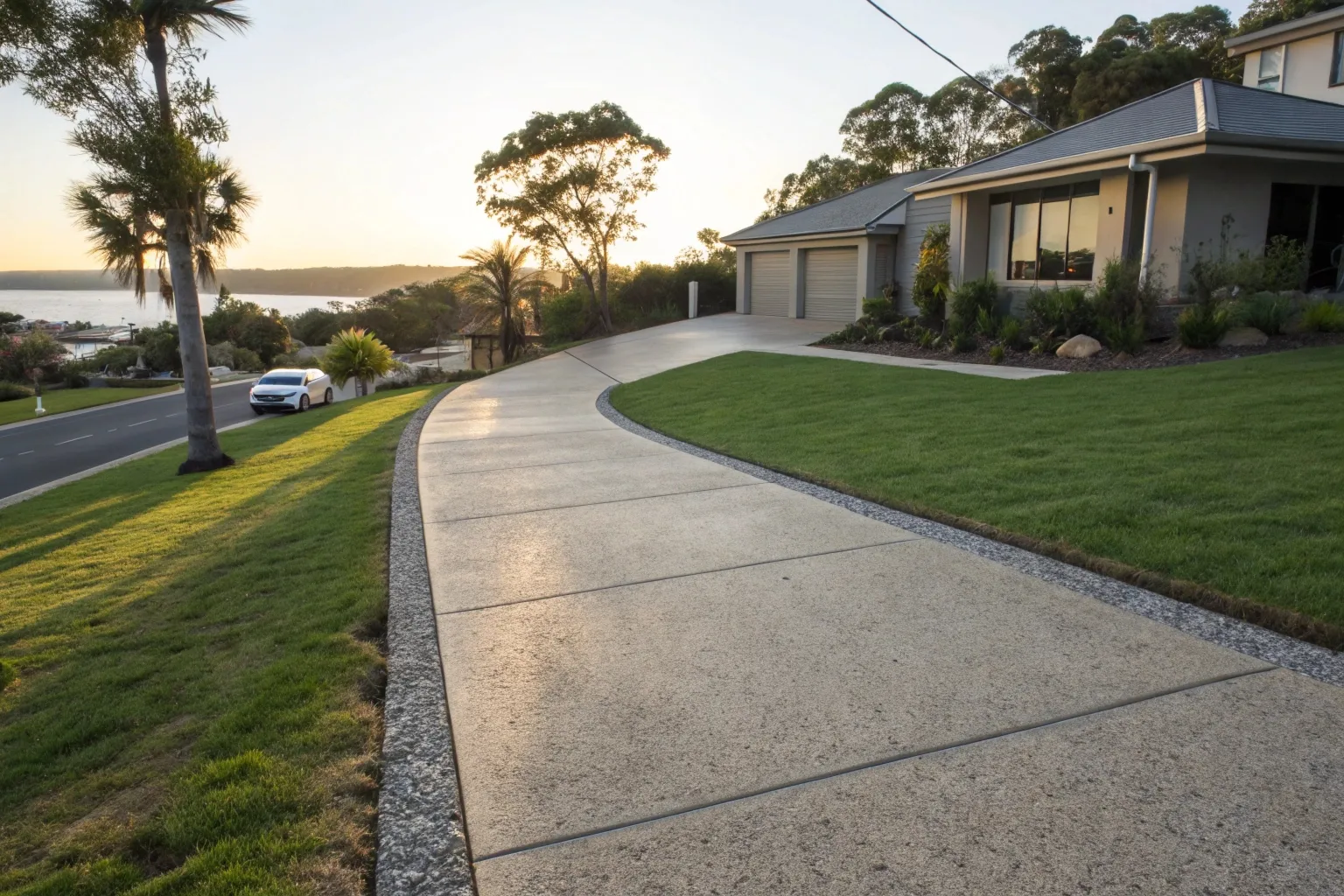
Exposed aggregate is created by adding a mix of decorative stones — pebbles, chip, or crushed aggregate — into the concrete pour, then washing back the surface paste while the concrete is still setting. What you’re left with is a textural finish where the natural stone shows through.
Because the aggregate is genuinely part of the slab rather than a surface coating, it doesn’t chip, flake, or peel over time. The texture is inherently non-slip, which is why it’s a popular pick for pool surrounds and any surface that gets wet.
How stamped concrete is made
Stamped concrete is poured as a normal slab, but before it fully sets, patterned mats are pressed into the surface to create the impression of pavers, stone, brick, or timber planks. A colour hardener is worked into the surface first, and a release agent is used so the mats don’t stick.
The result mimics a paved or laid finish but with none of the joints, no gaps for weeds, and no individual pieces to shift over time. From the street, a well-done stamped driveway can be genuinely hard to distinguish from real pavers.
Visual comparison
Exposed aggregate reads as natural, tactile, and coastal. It pairs particularly well with the modern coastal aesthetic of newer builds around Kingscliff, Casuarina, and Tweed Heads South. The texture catches light differently through the day, and the natural stone tones tie the driveway into the landscape.
Stamped concrete reads as more formal and considered — the patterns look designed rather than natural. It suits properties where the driveway needs to complement rendered brick or heritage-style architecture. Stamped patterns tend to work best on wider driveways where the pattern has room to breathe.
Wear, maintenance, and longevity
Both finishes will last decades when installed correctly, but they wear slightly differently:
- Exposed aggregate develops character with age. Small chips or wear points blend into the natural texture and are rarely noticeable.
- Stamped concrete relies on the colour hardener and sealer. Over ten to fifteen years the sealer needs re-applying to keep the colours vivid and the pattern crisp. Miss that maintenance window and the finish can start to look faded.
If you’d rather set-and-forget, exposed aggregate is the lower-fuss option. If you’re comfortable with a resealing cycle every decade or so, stamped concrete rewards the effort.
Cost considerations
Both finishes cost more than a plain broom finish, but they sit in similar territory as each other. Stamped concrete can trend slightly higher because of the patterning labour and the sealing work; exposed aggregate can be more affordable when standard aggregate blends are used. For a specific comparison on your project, request a quote and we’ll price both options against each other.
Which one should you choose?
Choose exposed aggregate if:
- Your home has a coastal or contemporary aesthetic
- You want a finish that ages gracefully with minimal maintenance
- You value non-slip performance on pool decks, pathways, or sloped driveways
Choose stamped concrete if:
- You want the look of pavers or stone without the maintenance headaches
- Your property has a heritage or formal style
- You have a wider driveway where a pattern will read from the street
You can also combine the two — a stamped concrete border with an exposed aggregate main field is a striking combination that plays to the strengths of both finishes. Either way, the right concreter will walk you through the trade-offs at quote stage.
Frequently asked questions
Which finish is more slippery when wet?
Exposed aggregate is naturally non-slip because of its texture. Stamped concrete depends heavily on the sealer used — always ask about a non-slip sealer additive if the surface will get wet regularly.
Can these finishes be added to an existing concrete driveway?
Not easily. Both finishes work best when integrated into a fresh pour. Existing driveways can sometimes be overlaid with a stamped overlay system, but the result is not as durable as a proper stamped pour.
Which is better for pool surrounds?
Exposed aggregate is the more common choice for pool decks because of its natural slip resistance and its ability to handle constant moisture. Concrete pool surrounds benefit from the tactile grip aggregate provides.